0
    Your Basket
    Your basket is empty
      Calculate Shipping
        Order before 12 noon on Mon 22nd Dec for despatch before Xmas. Any orders placed after this will be despatched on our return on 5th of Jan.
        Xmas Hours: We are closed from 12 noon 23rd Dec and re-open 5th Jan.

        Price Match Promise

        Low Trade Prices

        Phone Orders Welcome

        1 to 3 Days Delivery

        Easy Returns

        How to Remove Black Mould From Walls (UK Guide to Treatment & Prevention)

        How to Remove Black Mould From Walls

        Black mould on walls is one of the most common problems in UK homes, particularly where condensation, cold surfaces, or damp conditions are present. While many people attempt to remove mould using household cleaners or bleach, these approaches often fail to address the root cause — which is why black mould frequently returns.

        This guide explains how to remove black mould from walls properly, why simple cleaning often isn’t enough, and how professional mould control systems can remove, prevent, restore, and protect affected walls for the long term.

        What Causes Black Mould on Walls?

        Black mould thrives in environments where moisture and cold surfaces combine. In UK homes, this is most commonly caused by:

        • Condensation forming on cold external walls
        • Poor ventilation in bathrooms, kitchens, and bedrooms
        • Cold spots caused by low insulation values
        • Rising or penetrating damp in some cases

        Mould spores naturally exist in the air, but they only grow when conditions allow. Cold, damp wall surfaces create the ideal environment for mould to take hold and spread.

        Why Bleach Doesn’t Properly Remove Black Mould

        Bleach is often used to tackle visible mould, but it typically only removes surface staining. Black mould has deep-root structures that penetrate plaster and decorative finishes, meaning surface cleaning alone rarely solves the problem.

        There are also safety concerns:

        • Bleach is caustic and can cause skin burns
        • Fumes can irritate airways and worsen indoor air quality
        • The mould often returns once moisture conditions remain unchanged

        Effective mould removal requires deep treatment, not just cosmetic cleaning.

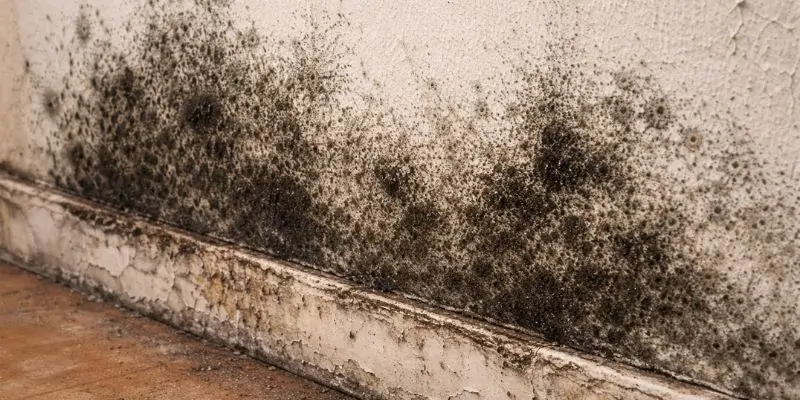
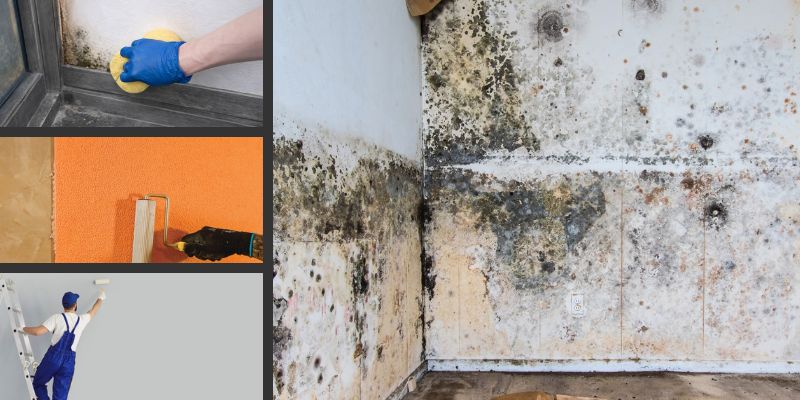
        Black mould penetrating plaster showing why surface cleaning is ineffective
        Black mould penetrating plaster showing why surface cleaning is ineffective

        Step-by-Step: How to Remove Black Mould From Walls Properly

        Step 1: Remove Mould at Its Roots

        To properly remove black mould, a deep-penetrating biocidal treatment is required. These treatments are designed to reach mould spores embedded within plaster and masonry, killing mould at its root rather than just improving appearance

        Clean mould with a deep-penetrating biocidal treatment to prevent black mould returning
        Clean mould with a deep-penetrating biocidal treatment to prevent black mould returning

        Step 2: Prevent Mould from Returning

        Once mould has been removed, prevention is essential. Even a clean wall can quickly become reinfected if moisture levels remain high.

        • Preventative measures include:
        • Improving ventilation
        • Managing humidity
        • Incorporating fungicidal additives into paints, gloss finishes, or wallpaper paste during redecoration

        These additives create a surface that is inhospitable to future mould growth

        Applying fungicidal additive to paint can help prevent black mould returning
        Applying fungicidal additive to paint can help prevent black mould returning

        Step 3: Restore Cold or Damp Walls

        Where walls remain cold — particularly on solid external walls — condensation will continue to form and provide a suitable background for the mould to regrow regardless of cleaning.

        Restoring these walls may require:

        This step is crucial in homes where mould repeatedly returns despite treatment.

        Applying internal wall insulation to reduce condensation and black mould
        Applying internal wall insulation to reduce condensation and black mould

        Step 4: Protect Walls Long Term

        Long-term protection focuses on preventing moisture, bacteria, and condensation from affecting decorative finishes.

        Protective coatings can:

        • Reduce condensation forming on cold surfaces
        • Improve thermal performance
        • Protect walls from impact and moisture ingress

        This final step ensures mould removal work remains effective over time

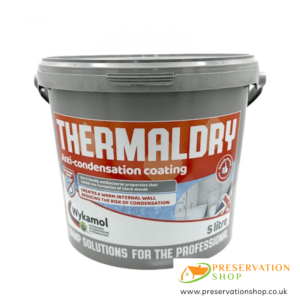
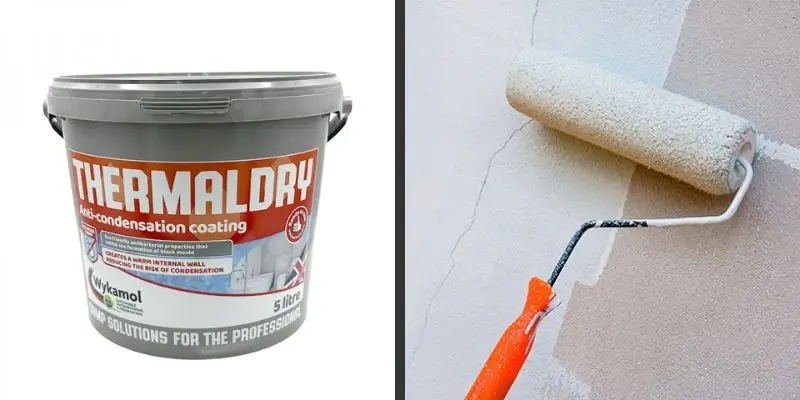
        Thermaldry Anti-Condensation Coating is both thermally insulating and water repelling
        Thermaldry Anti-Condensation Coating is both thermally insulating and water repelling

        Choosing the Right Black Mould Treatment System

        Not all mould problems require the same level of intervention. Our mould control approach is based on three clearly defined systems, allowing treatment to match the severity of the issue.

        Black Mould Treatment System 1: Treating Small or Early Black Mould Outbreaks

        Best for:

        • First-time mould outbreaks
        • Small areas on walls, ceilings, window reveals, and skirting boards

        This system focuses on:

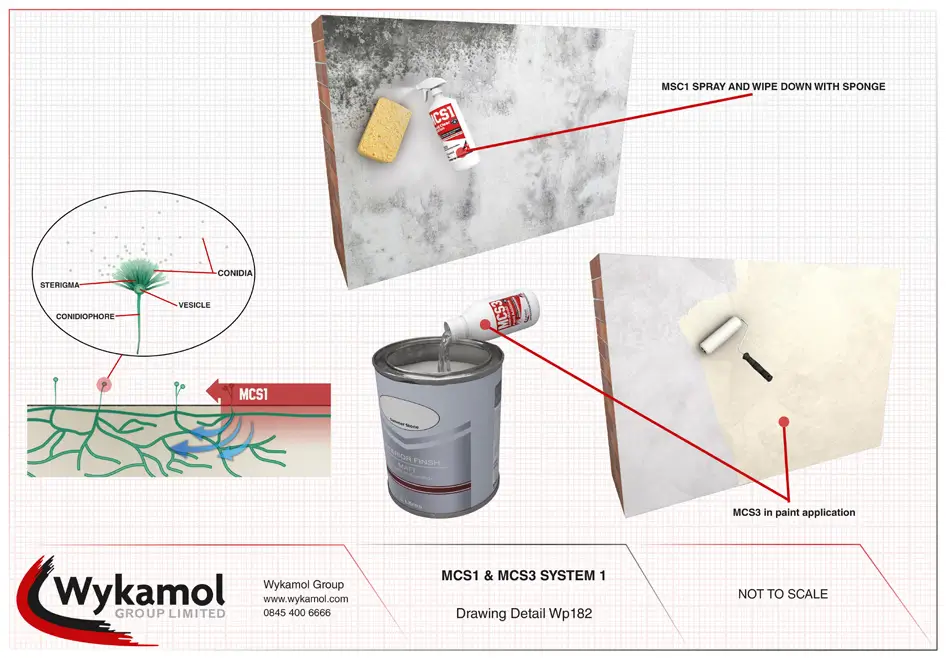
        Black Mould Treatment System 1: Treating Small or Early Black Mould Outbreaks
        Black Mould Treatment System 1: Treating Small or Early Black Mould Outbreaks

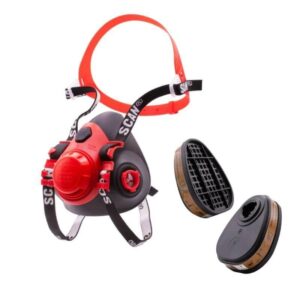
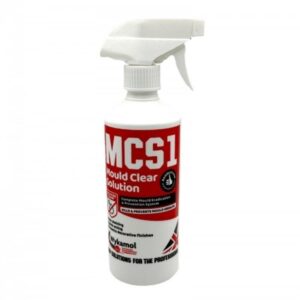
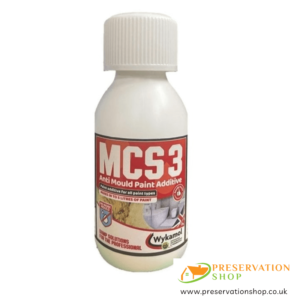
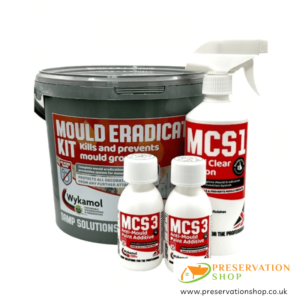
        For this system you will require the following products of which you can buy everything you need in one Mould Eradication Kit or you can purchase the MCS1 Ready To Use Mould Cleaning Solution and the MCS3 Anti Mould Paint Fungicidal Additive separately. 

        Black Mould Treatment System 2: Treating Recurring Mould Caused by Condensation

        Best for:

        • Kitchens, bathrooms, and bedrooms
        • Walls affected by repeated condensation

        This system combines:

        Black Mould Treatment System 2: Treating Recurring Mould Caused by Condensation
        Black Mould Treatment System 2: Treating Recurring Mould Caused by Condensation

        For this system you will require the following products: 

        Black Mould Treatment System 3: Treating Cold, Damp Walls and Persistent Mould

        Best for:

        • Cold external walls
        • Bay windows
        • Solid wall properties

        This is a full restoration approach, addressing:

        • Low surface temperatures
        • Persistent condensation
        • Long-term moisture performance

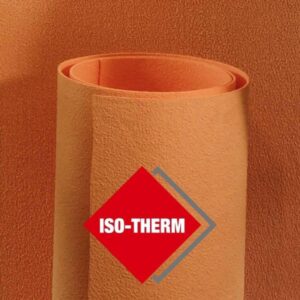
        This is the ideal system to treat cold damp walls as it builds upon systems 1 and 2 by incorporating Isotherm Thin Internal Wall Insulation (TIWI) which provides walls and ceilings with a water resistant, thermal barrier which vastly increases the surface’s temperatures whilst also preventing water and moisture ingress.

        Black Mould Treatment System 3: Treating Cold, Damp Walls and Persistent Mould
        Black Mould Treatment System 3: Treating Cold, Damp Walls and Persistent Mould

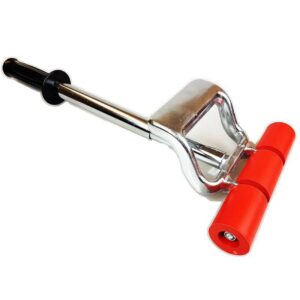
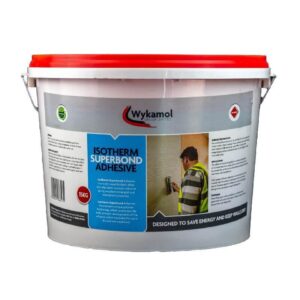
        For this system you will require the following products: 

        Health, Housing Standards, and Black Mould

        Black mould growth is increasingly recognised as a housing health issue. Black mould itself is not necessarily a direct cause of illness, the spores it releases are of concern and the cold, moisture-laden air required for mould growth can both negatively impact respiratory health.

        UK housing standards, including the Homes (Fitness for Human Habitation) Act, emphasise the importance of controlling damp and mould to maintain healthy living environments.

        When Cleaning Isn’t Enough

        You should consider more comprehensive treatment if:

        • Mould returns within weeks of cleaning
        • External walls feel cold to the touch
        • Condensation regularly forms on walls
        • Decorative finishes continue to fail

        Frequently Asked Questions About Removing Black Mould

        Yes, but only when both the mould and the underlying moisture problem are addressed.

        No. Bleach usually only helps to remove surface staining and does not kill mould at its roots.

        Because condensation, cold walls, and/or high humidity levels have not been resolved.

        Painting over mould without treatment often traps spores, and the moisture from the paint can feed the mould roots and lead to regrowth.

        For recurring or widespread mould, professional systems are far more effective than repeated cleaning.

        Final Thoughts

        Removing black mould from walls requires more than surface cleaning. By addressing removal, prevention, restoration, and protection, mould problems can be solved at their source — improving both property condition and indoor air quality.

        Need Professional Help With Black Mould or Damp?

        While small or early mould problems can sometimes be managed with the right products and preventative steps, persistent or recurring black mould often indicates an underlying damp or condensation issue that needs professional assessment.

        If mould continues to return, appears across large areas, or affects cold external walls, it may be a sign of:

        • Ongoing condensation problems
        • Poor ventilation or insulation
        • Structural damp issues such as penetrating damp

        In these situations, professional investigation can help identify the root cause, not just the visible symptoms.

        We hold a register of professionals with experience in diagnosing and resolving damp, condensation, and mould problems in UK properties. If you’re unsure what’s causing black mould in your home, or previous attempts to remove it haven’t worked, getting expert advice can save time, cost, and repeated frustration.

        👉 Get in touch with our team to discuss your situation or arrange a professional assessment.

        Mike Davison - Managing Director of the Preservation Shop

        Article by Mike Davison CSSW, M.Inst.SSE.

        Mike has over 30 years’ experience in the construction industry & specialises in Building Pathology, remedial works & structural repair.

        Share this post: